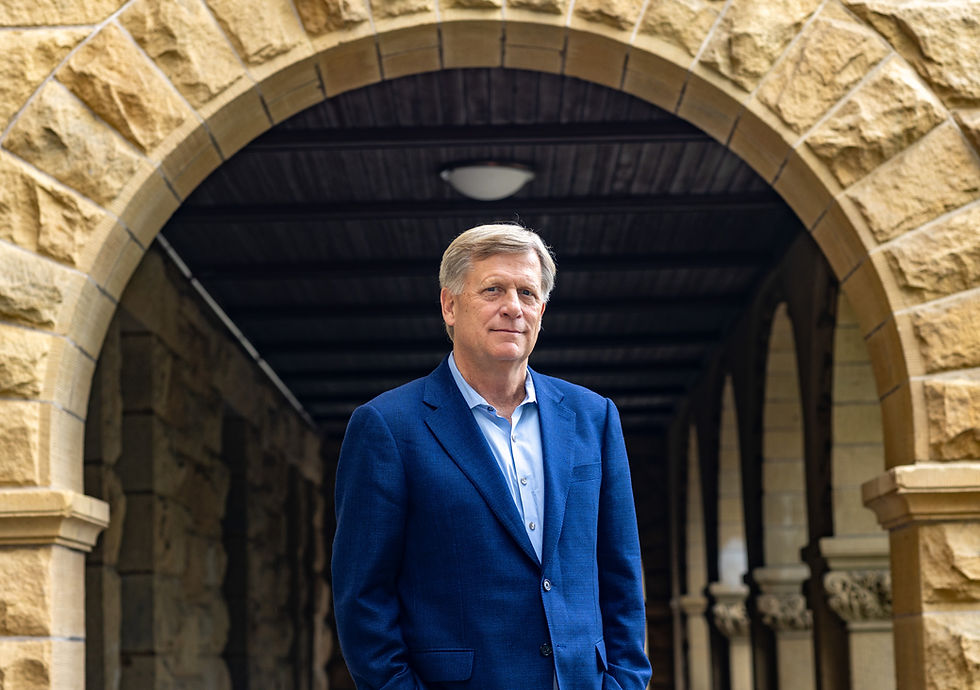
Michael McFaul
Former United States Ambassador to Russia Michael McFaul pulls no punches when he describes President Donald Trump’s policies toward Russia, Ukraine, NATO, and America’s traditional democratic allies.
McFaul, who served as ambassador from 2012 to 2014, has repeatedly condemned Trump’s reluctance to confront Russian interference in U.S. elections, cyberattacks, and disinformation campaigns. He strongly supported investigations into Moscow’s efforts to influence the 2016 election and has criticized attempts to minimize or dismiss those actions. Russian interference, he argues, was both real and significant. He has frequently questioned why defending American elections should be a partisan issue and insists that the United States must respond forcefully enough to deter future attacks.
Regarding Ukraine, McFaul has argued that the Trump administration effectively granted concessions to Russia before negotiations even began by signaling a willingness to accept Russian territorial gains. Experienced negotiators do not surrender either physical or political territory before talks commence. Any settlement, he maintains, must include Ukraine and America’s European allies.
A steadfast supporter of NATO, McFaul views the alliance as one of America’s greatest strategic assets. He has expressed concern over Trump’s willingness to undermine relationships that have advanced U.S. interests for more than eighty years. He has also questioned the value of Trump’s confrontational rhetoric directed at longstanding allies such as Denmark and Canada, arguing that such positions unnecessarily weaken democratic partnerships.
The central theme of McFaul’s 2025 book, Autocrats vs. Democrats, is that the world is engaged in a broader struggle than a new Cold War—a contest between democratic and authoritarian systems. Drawing upon decades of experience in Russia and his career as a political science professor at Stanford University, McFaul warns that assaults on the rule of law and democratic institutions in the United States resemble patterns he witnessed as Russia retreated from its brief experiment with democracy and returned to authoritarian rule.
He has also criticized efforts to reduce America’s global engagement, including cuts to foreign aid and international institutions. Such retreats, he argues, create opportunities for Russia and especially China while undermining long-term American interests. McFaul said, “We cannot compete when we abandon the field.”
McFaul’s message is clear: the United States should lead a coalition of democracies to confront authoritarian powers, not imitate their tactics, or accommodate their ambitions.
“As long as the United States remains a democracy, I want to be in the ideological fight against illiberal nationalism and continue to make the case for why a return to internationalism, multilateralism, and support for democracy and human rights worldwide best serves American national interests.”
PALO ALTO, CALIFORNIA - NOVEMBER 20, 2025